
Introduction
If you think successful forex trading requires staring at charts all day, think again. The real secret lies in planning not reacting. And you don’t need hours to do it. In fact, with a structured approach, you can create a powerful daily trade plan in just 15 minutes.
This article walks you through the exact steps to prepare for the trading day quickly and efficiently. Whether you’re a full-time developer checking charts over coffee ☕ or a part-time trader juggling a busy schedule, this routine will keep your trades sharp and stress-free.
Step 1: Start with the Bigger Picture (3 Minutes)

Before you get into the nitty-gritty, zoom out and ask: What’s the market mood today?
Here’s what to check:
- Economic Calendar: Use sites like Forex Factory or TradingView to spot major events interest rate decisions, CPI reports, central bank speeches, etc. Avoid opening new trades just before high-impact news unless you’re specifically planning around it.
- Global Sentiment: Are stocks rising or falling? Is there panic or optimism? If risk sentiment is negative, safe-haven currencies like USD or JPY may strengthen. If positive, you may see strength in AUD, NZD, or GBP.
- Market Sessions: Know which session you’re trading in Asian, London, or New York and what pairs are most active. London and NY are generally best for volatility and clean moves.
🔍 Goal: Build a quick directional bias for the day: bullish, bearish, or neutral.
Step 2: Mark Your Key Levels (4 Minutes)
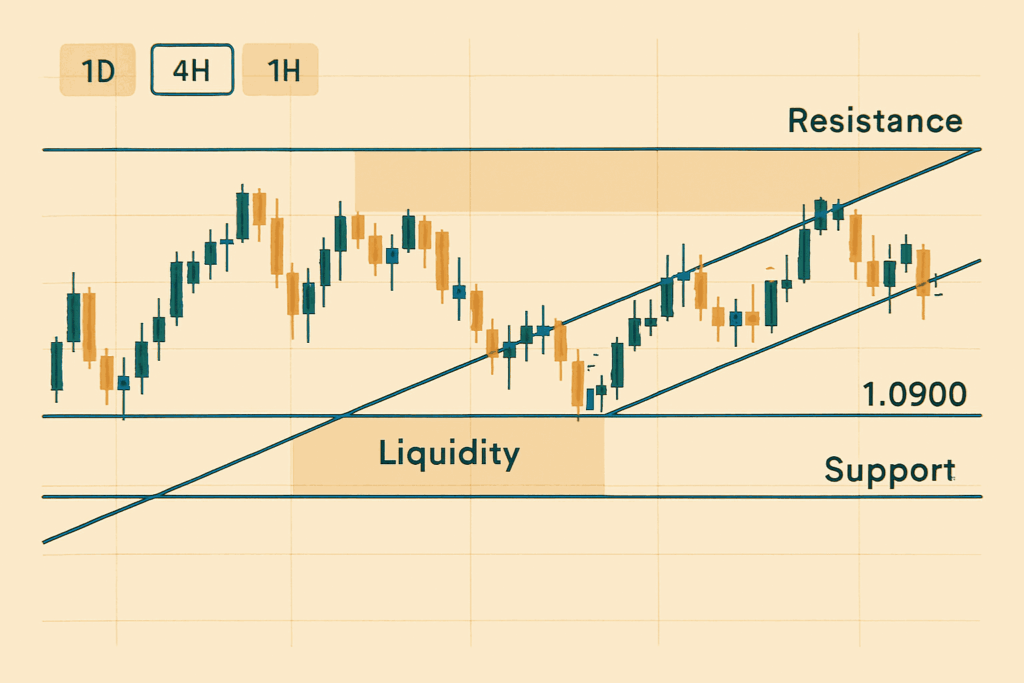
Next, open your charting platform (like TradingView or MT5) and quickly identify important price levels.
Focus on the 1D, 4H, and 1H charts.
Mark:
- Support & Resistance: Look for clean zones where price has reversed or stalled multiple times. These are decision points.
- Trendlines & Channels: Are we trending or ranging? Draw your structure clearly.
- Liquidity Zones & Gaps: Areas with strong wicks, imbalance, or stop-hunt zones.
Keep your chart clean don’t overwhelm it with 20 indicators.
🎯 Goal: Identify 2–3 high-probability zones where you’ll watch for trade entries or rejections.
Step 3: Define Your Trade Bias (2 Minutes)
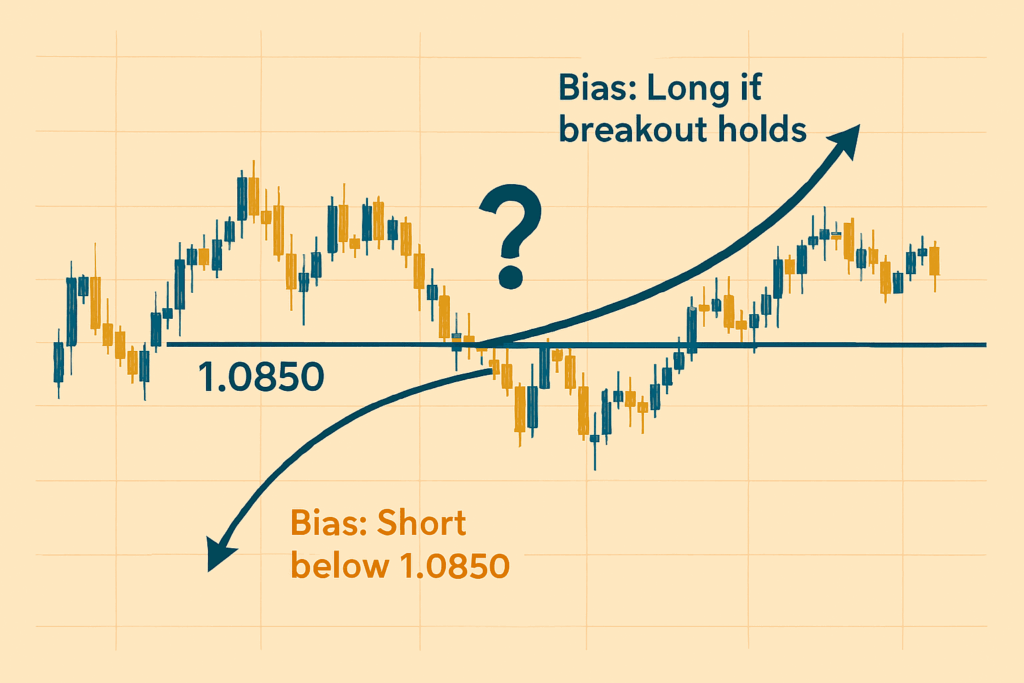
Now that you’ve got key levels, combine them with the bigger picture to form your trade bias.
Ask:
- Am I trading with the trend, or against it (countertrend)?
- Are we approaching major support/resistance?
- Is there a news catalyst that could shift direction?
Example biases:
- “I’ll look for short setups on EUR/USD if price fails to break 1.0850.”
- “If gold breaks $2,345, I’ll wait for a pullback to enter long.”
🧭 Goal: Commit to a directional idea for the day and stay disciplined unless clear invalidation happens.
Step 4: Plan Your Entry Triggers (3 Minutes)
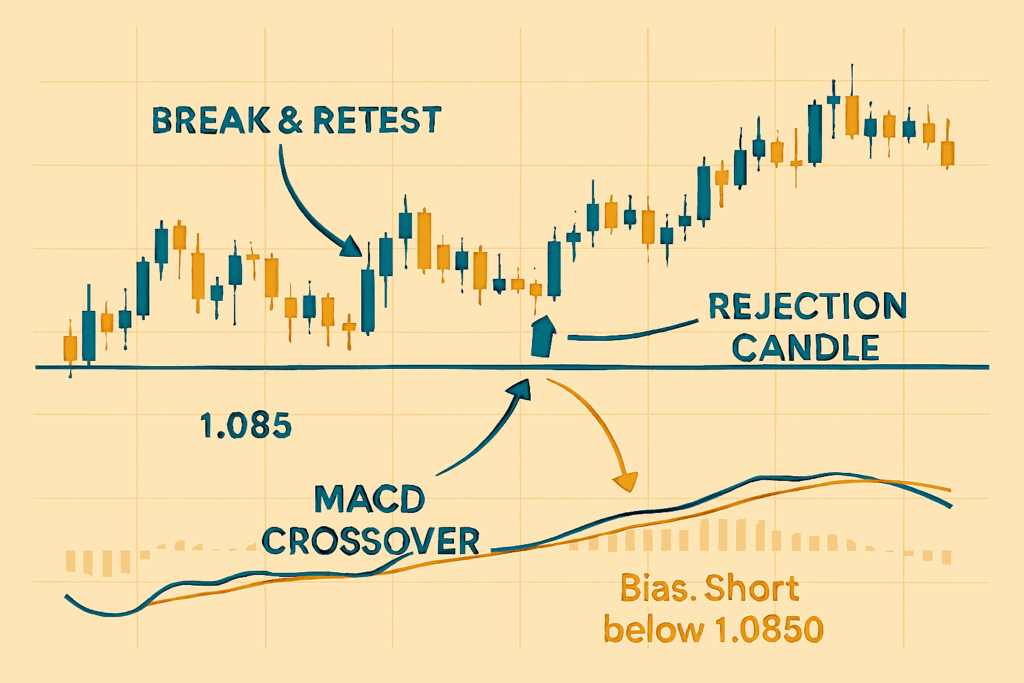
Now it’s time to plan how you’ll enter a trade not just where.
Choose your preferred entry style:
- Break & Retest: Wait for a level to break and then enter on a pullback with confirmation.
- Rejection Candles: Look for pin bars, engulfing patterns, or inside bars on the 15m or 1H timeframe.
- Indicator Confirmation: Combine key levels with RSI divergence, MACD crossovers, or moving average confluences.
Also predefine:
- Entry Price Range
- Stop-Loss Placement (e.g., 10–15 pips beyond structure)
- Take-Profit Target (often at the next key level or a 1:2 risk-reward ratio)
🧠 Goal: Enter only on confirmation don’t rush or FOMO into trades.
Step 5: Set Alerts & Walk Away (3 Minutes)
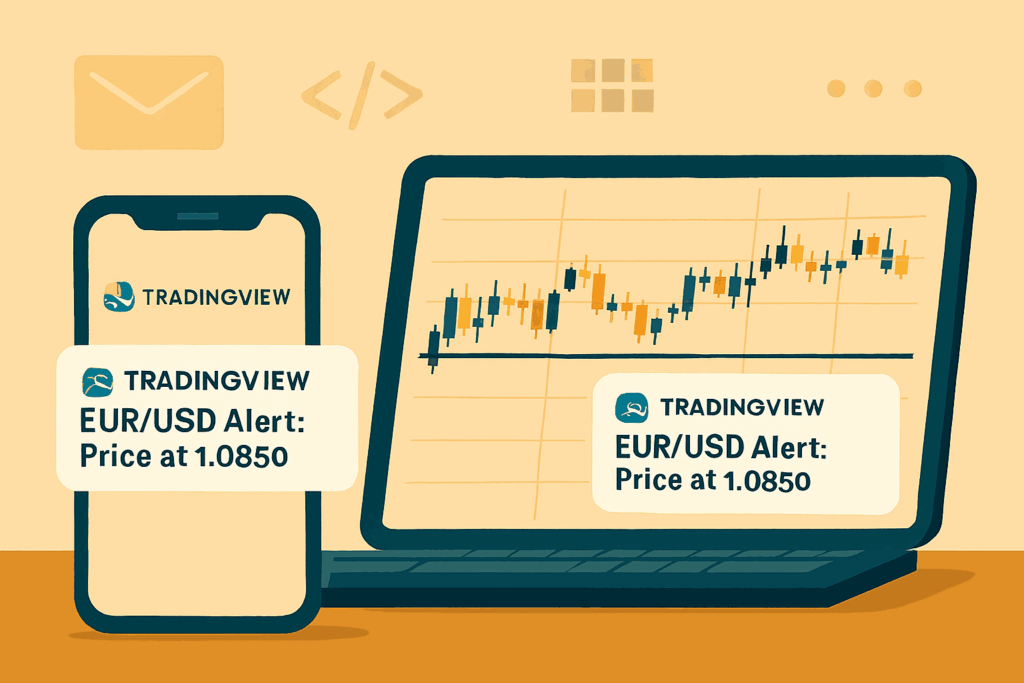
Once you’ve built your plan, you don’t need to stare at the screen all day.
- Set price alerts near your key levels using TradingView or your broker app.
- Set alerts for:
- Price entering your trade zone
- News events going live
- Breakout confirmations
You can now monitor the market passively while focusing on other work or building your next app or automation 😉.
📲 Goal: Let the market come to you. Alerts keep you focused and eliminate decision fatigue.
Bonus: Use a Simple Template to Repeat Daily
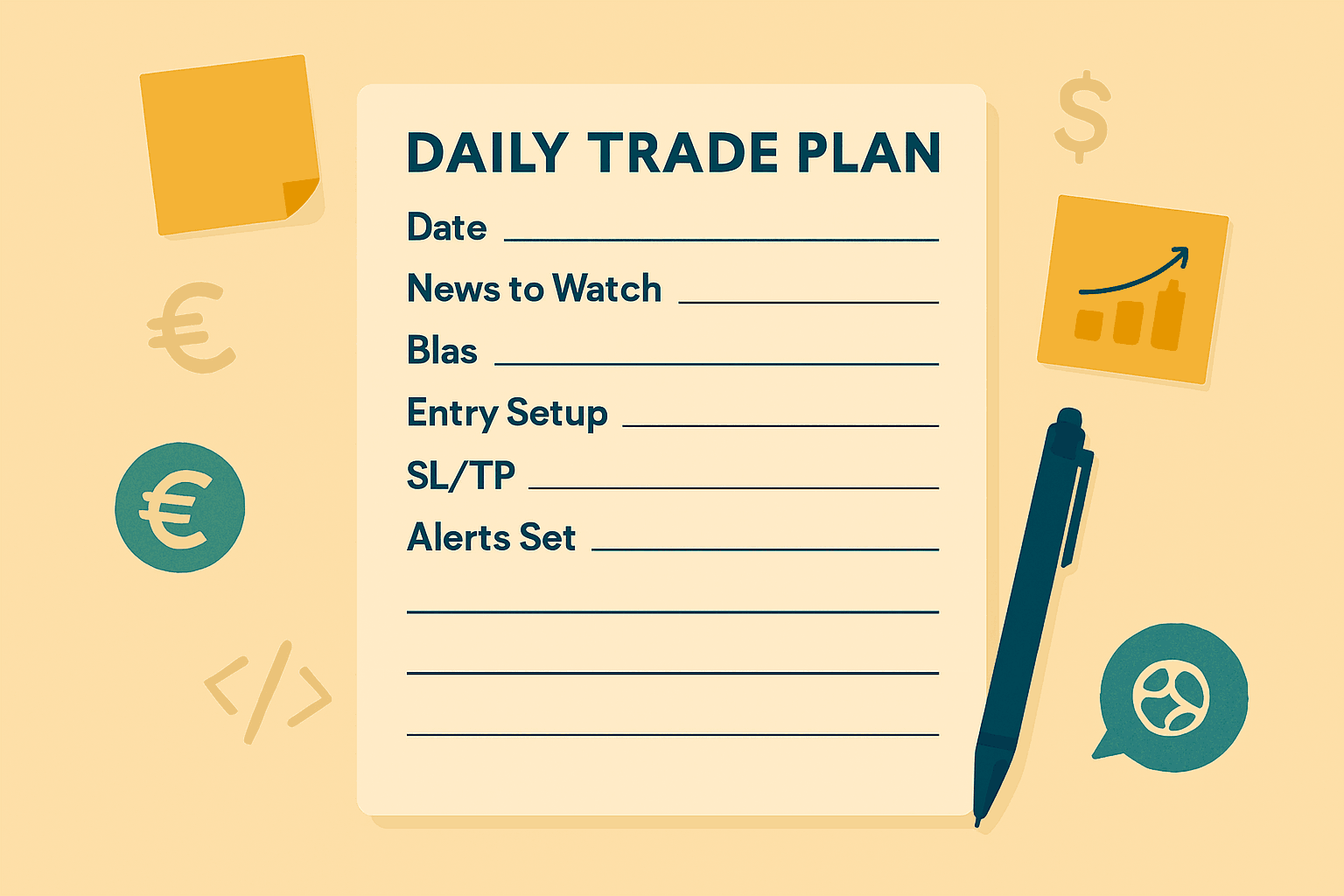
Create a reusable journal or checklist that looks like this:
Daily Trade Plan Template:
- Date: June 27, 2025
- News to Watch: Eurozone CPI, US jobless claims
- Bias: USD mildly bearish
- Key Levels:
- EUR/USD Resistance: 1.0850
- Gold Support: $2,330
- Entry Setup:
- EUR/USD short if rejection near 1.0850
- SL: 1.0880, TP: 1.0780
- Alerts Set: ✅
This keeps your process repeatable and consistent, even on busy days.
Conclusion

A good trade isn’t made when you click “buy” or “sell” it’s made when you plan with clarity. And with the right structure, you can build a powerful daily trade plan in just 15 minutes.
Focus on the big picture, identify high-probability zones, define your bias, wait for confirmation, and let alerts do the rest. The more consistent your routine, the more confident your trades will be without draining your time or your energy.
Whether you’re working a full-time job, coding your next tool, or just trading on the side, this system gives you the edge of a pro without the pressure.