
Introduction
Juggling your 9-to-5 job with forex trading might seem like a stretch but it’s totally doable. The secret lies in creating a Forex routine that fits around your work schedule, rather than fighting against it. In this article, you’ll learn how to create a reliable trading structure before, during, and after work hours without sacrificing performance or peace of mind.
1. Map Out Your Free Time

Start by being honest about when you’re realistically free:
- Morning: Are you up early before work?
- Lunch Break: Can you check charts on your phone?
- Evenings: Are you too tired or still sharp?
Knowing your natural rhythm helps define when to trade not just how.
2. Choose the Right Market Session

Align your trading with a session that fits your availability:
| Time (Your Local) | Forex Session | Best For |
| Early Morning | Tokyo | Scalping, news prep |
| Midday / Lunch | London (mid) | Monitoring trades |
| After 6 PM | New York Close / London-Tokyo overlap | End-of-day analysis & entries |
Pro Tip: Avoid trading during work hours unless your job allows for flexible screen time.
3. Create a Sample Daily Forex Routine
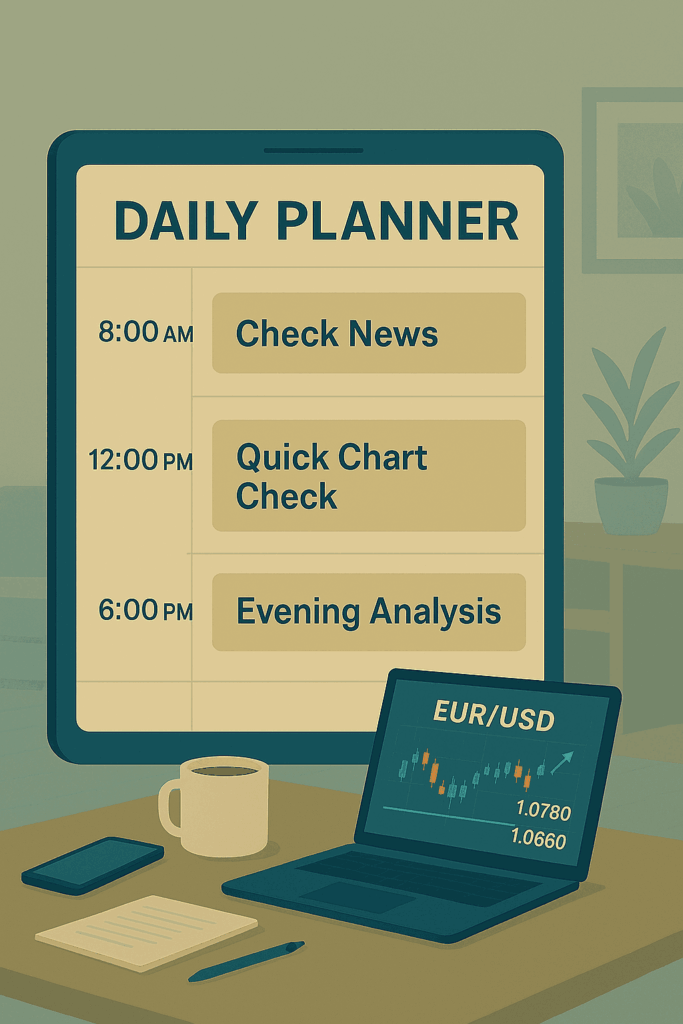
Here’s an example for a 9-to-5 schedule:
- 7:30 AM – 8:00 AM: Check economic news, scan overnight moves, update watchlist
- 12:30 PM – 12:45 PM: Quick glance at charts, manage open positions via mobile
- 7:00 PM – 7:30 PM: Full analysis, place new trades, update journal
- Weekend (Sat/Sun): Backtest, review trades, plan for the upcoming week
4. Stick to a Simple Strategy
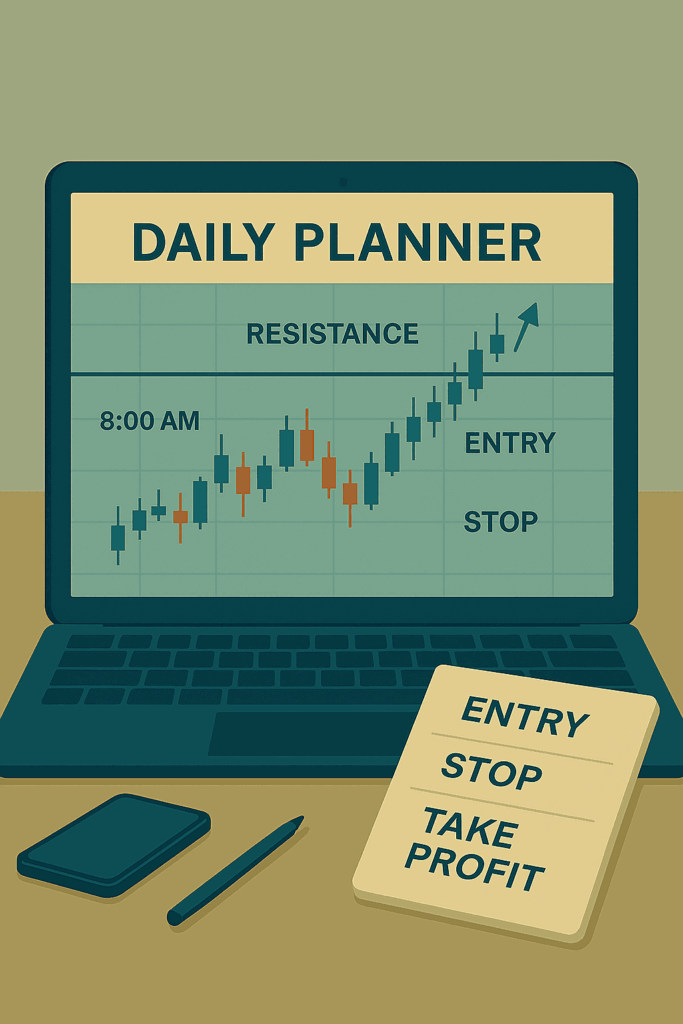
Busy schedules demand simple systems. Focus on:
- Price Action or Breakout Setups
- Daily/4H charts to avoid noise
- Clear entry/exit rules so you don’t overthink
Avoid strategies that require constant monitoring like scalping.
5. Use Automation and Alerts

Let tech handle the grunt work:
- Set alerts on key price levels (TradingView / MetaTrader)
- Use pending orders to automate entries
- Consider EAs (Expert Advisors) if you’ve tested them well
These tools help you trade hands-free while you’re at work or commuting.
6. Keep a Weekly Structure
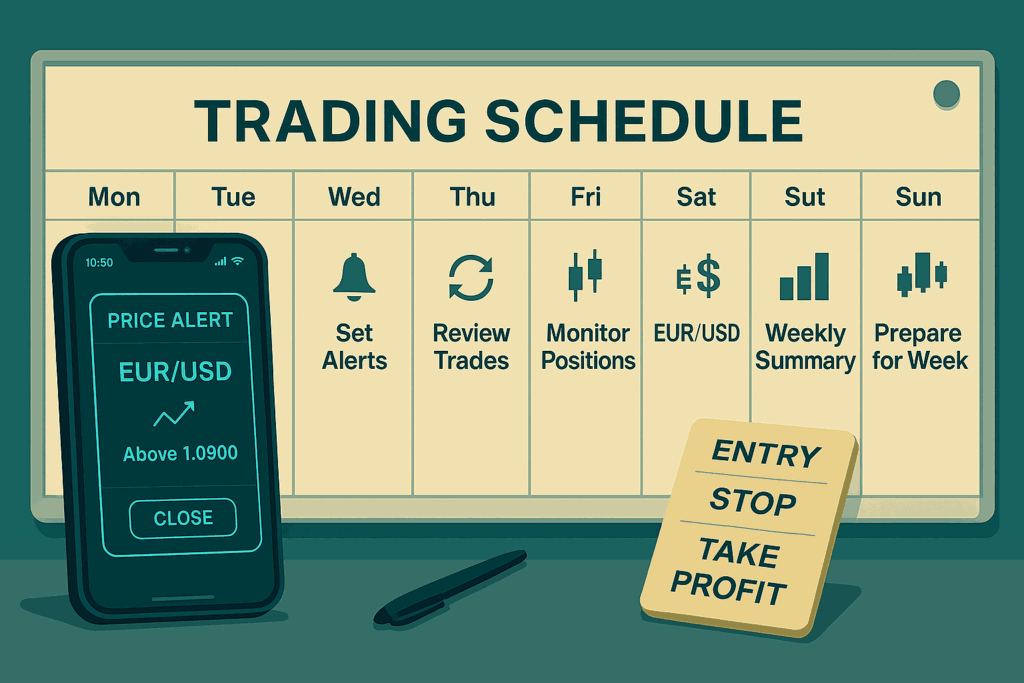
Just like your work week, your trading week should follow a rhythm:
- Monday: Light activity, observe market reaction to news
- Tuesday–Thursday: Main trading days
- Friday: Close trades, avoid new entries late
- Weekend: Review and prep
Trading with structure improves consistency and reduces stress.
7. Journal and Adjust

Even if you only trade a few times a week, journaling is gold:
- Track results
- Learn from wins and mistakes
- Adjust routines as your job or lifestyle changes
Use Notion, Excel, or dedicated trading journal apps.
Conclusion
You don’t need to quit your job to trade forex you just need a solid plan. By building a routine that works with your 9-to-5, not against it, you’ll develop consistency, avoid burnout, and steadily grow your trading skills. With a smart structure, trading becomes part of your lifestyle not a burden on top of it.